

What the Hail
Spring weather in the Middle of Nowhere

I never intended for these Dispatches to be about the weather, but it’s the time of the year here in Wisconsin where the weather changes, quite literally, by the minute. So here we are, talking about hail.
On April 14, I received a loud alert on my phone from the National Weather Service warning that I was about to experience “baseball-sized hail.” At the time of said alert, the outside temperature was 73°F (23°C), So I initially brushed it off. But then, out of an abundance of caution, I decided I should probably move the truck into the garage.
Of course I first had to move some stuff around. With all the small engines we’ve got, the garage gets pretty crowded. It took me about 15 minutes to Tetris out enough space to fit the pickup truck, and shortly after I parked it in the garage, the promised hail arrived.
Mock the accuracy of the NWS all you want, but they were dead on with this prediction.
At first, the hail was small, pea-sized. Then it was quarter-sized. And it wasn’t long before tennis-ball-sized hail pellets started coming down.
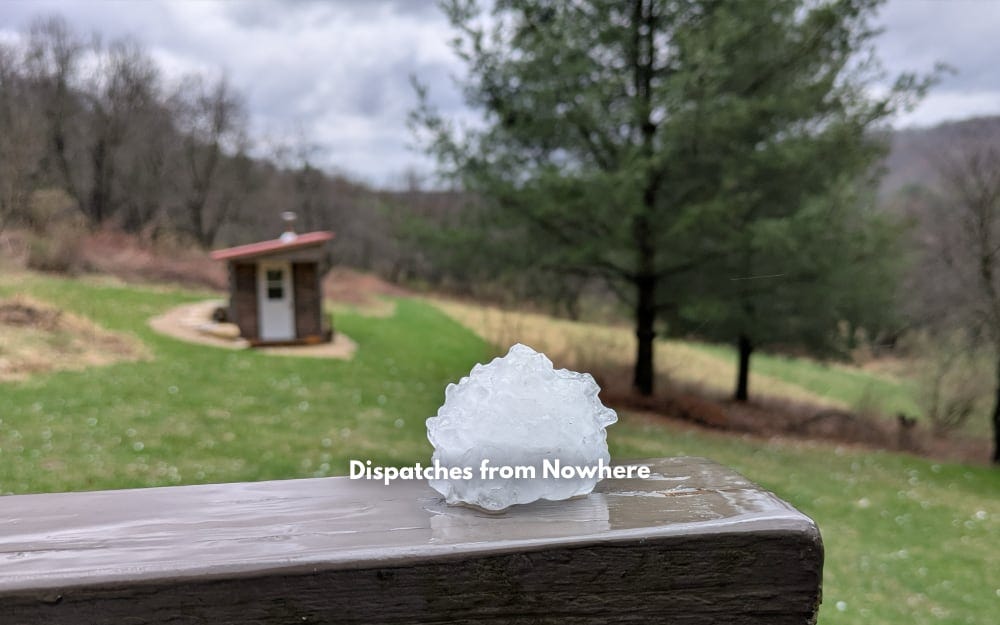
Inside the house it sounded like a descent (that’s the accepted collective noun) of angry woodpeckers were going HAM on the roof.
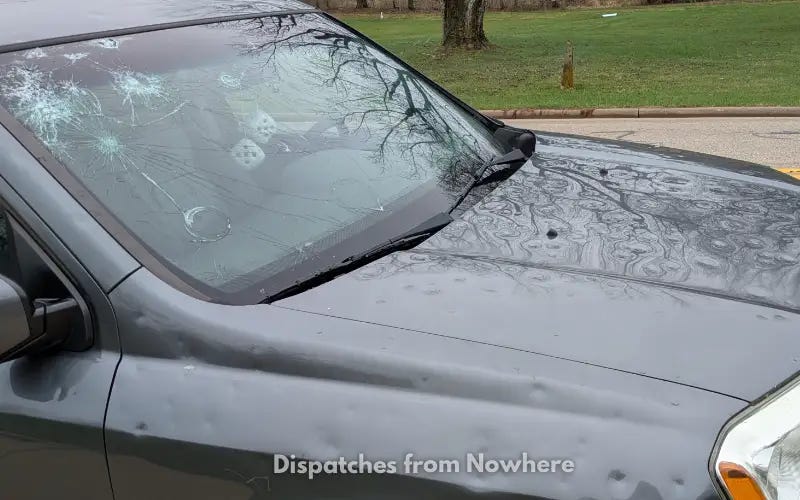
The whole storm only lasted about 15 minutes but it caused a lot of damage throughout the area. And then, about three hours later, another hailstorm rolled through (although with considerably smaller hailstones).
Fortunately, we didn’t sustain any notable property damage. But the town of Westby, about 16 miles west of the Middle of Nowhere, suffered significant hail damage. There are a lot of vehicles around the area with hail battle scars.
What to Read: Dungeon Crawler Carl
Over the past few years there’s been a disturbing trend of declining adult readership. Back in 2022, some studies have reported that fewer than half of American adults read a single book in 12 months. This is a depressing statistic. So I’m here to help.
If you’ve fallen out of the reading habit for whatever reason, I’m here to jumpstart you back into enjoying the written word with Dungeon Crawler Carl (now available in paperback) by Matt Dinniman.
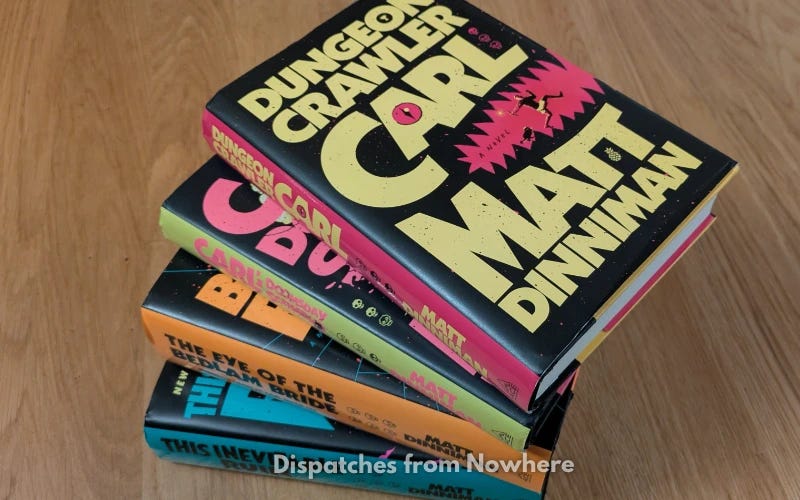
The basic plot has Carl, a coast guardsman living in Seattle, and Princess Donut, his ex-girlfriend’s prize winning show cat, survive a deadly alien attack. They soon find themselves fighting (along what remains of humanity) for survival in a sadistically constructed 18-level dungeon overloaded with malevolent creatures and diabolical traps that’s operated for profit by a conglomeration of alien races.
Each level of the dungeon has a time limit. If you don’t make it to the next level before your time is up, well, your time is up. And on top of that, the whole ordeal operates as a reality TV show run by an all-powerful AI prone to making whimsical game rulings that’s broadcast throughout the known galaxies to entertain the masses.
In short, there’s a lot going on here. Dinniman does a great job of handling a large cast of characters, imbuing each Crawler (that’s what the players are called) with a unique personality. Dinniman’s writing is often silly and sometimes a little crude, so the books will surprise you when a scene hits the feels way harder than you’re expecting. There will be tears.
The series falls into the LitRPG genre (that’s short for Literary Role Playing Game), where a main conceit of the plot is that the characters are part of a game (usually a deadly one) and they are fully aware that they are participants in this game. Hallmarks include (often exploitable) game mechanics, character stats, skill levels, and loot.
Dungeon Crawler Carl, in particular, combines elements of video games, role-playing games, pop culture, and a offers a poignant jab a late-stage capitalism framed as warring intergalactic corporations.
Anyway, if you’re into gaming, worldbuilding, cats, dark humor, satire, or just a riotously good reading experience, start here.
Oh, did I mention that Princess Donut is a talking cat with human-level intelligence and an inflated sense of importance? No? Well, if that doesn’t convince you to read these books, then I can’t help you.
It’s a Dungeon Crawler World
Since I started reading Dungeon Crawler Carl in 2024, Carl and Princess Donut have started showing up in other media.
The first time I noticed Carl showing up outside of the book series was a mention that Seth MacFarlane (he of Ted and The Orville) had optioned it with the intent of producing a live-action television series for Peacock. There are no more specifics beyond that, but it does seem to be “in production.”
There’s also a Webtoon version of the story that’s been turned into a graphic novel (from Vault Comics) set for release on May 19. Another comic, Crocodile (focusing on Florin, one of the side characters) was recently successfully crowd-funded. It’s scheduled for release (also from Vault Comics) in March 2027.
And it only makes sense that Dungeon Crawler Carl, a book series set inside a role-playing game, would spawn a crowd-funded tabletop role-playing game like the one that has been recently announced by Renegade Game Studios via Backerkit.
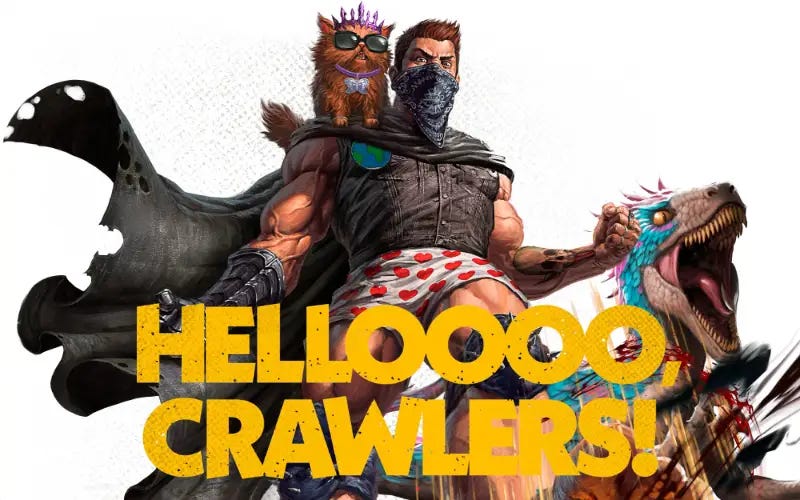
I initially resisted the Dungeon Crawler Carl RPG situation because I’ve developed RPG fatigue — it seems like anyone with an even marginally popular intellectual property quickly gets turned into an RPG.
But my kids convinced me to take a look. And — damn — it looks good (if for no other reason that to really dig in on the universe lore). So I backed it.
If this is something you’d be interested in, the backing is open until May 15.
Password Manager
We’re coming up on the first Thursday in May (May 7 this year), a day known to people who work (or have worked) in information security as World Password Day.
The holiday (if you can really call it that) was started in 2013 by Intel with the aim of raising awareness around poor password habits. And since I recently recommended to a group of friends that everyone (in the global sense) should be using a password manager, I figured this might be a good time to continue spreading the word.
Using a Password Manager is, without hyperbole, the single best thing the average internet user can do to protect themselves from online hacking and identity theft.
I recommend Bitwarden as an easy entry point to the world of password managers, mainly because it’s totally free.

Of course Bitwarden is not the only password manager out there. There’s also Dashlane, Proton Pass (which is part of the Proton Mail suite), NordPass (part of the NordVPN family), and countless others. But they’re all pretty much the same (except Proton, which has some extra functionality around email obfuscation).
Password Managers are nice because all your passwords are stored and encrypted behind one single password. So, with a Password Manager you only need to remember that one password.
Small aside: If you want to generate that one secure password, I recommend the Electronic Frontier Foundation’s (full disclosure: annual donor here) dice-based passphrase system.
In addition to storing your passwords securely, password managers will also generate secure passwords for you on the fly. You don’t need to use an non-secure one that’s just incrementally one number or letter higher than your last used password. Most password managers will interface with your web browser (via an extension), and handle the job of filling in your passwords seamlessly.
Full disclosure time. Although I recommend it, I don’t use Bitwarden. But this is only because I’ve been using another password manager for more than a decade and don’t want to transfer all my passwords.
But I totally would use Bitwarden if I started today. I do, in fact, have a Bitwarden account just in case.
Bitwarden is most notable because it’s totally free for life. There’s also an option to pay $20 a year for a Premium Plan (it used to be $10, but it’s been creeping up over the years), but the free plan will handle the needs of most people and supports two users.
Bitwarden is open source (transparency in programming), works across Mac, iOS, PC, and Android and uses AES-256 encryption (industry-standard encryption used by banks, the government, healthcare systems, and credit card processors).
Don’t just take my word for it (although I am a former tech writer for an international cybersecurity firm). Here are some recent-ish reviews:
Wired Magazine Review (9/10) • Password Manager Review (4.8/5) • The Wirecutter (NY Times) (Budget Pick) • PC Mag (4.0)
Some of you may have seen a recent news item about that Bitwarden was hacked. And this is true. But it didn’t affect the standard user-facing program at all. It was a targeted attack on the CLI (command line interface) version used at the developer level.
The infiltration was identified within 90 minutes and patched almost immediately. If you’re interested in reading what happened, Bitwarden has published an explanation of the attack and the mitigation steps they took on the Bitwarden Community Forum.
Short version, though — Bitwarden remains totally secure and safe to use. And it’s definitely a lot safer than keeping a list of passwords on a scrap of paper on your desk or stored in a Google Sheet.
But if still remain wary putting your passwords in the cloud (even encrypted), then check out KeePassXC, a totally free, non-cloud, self-hosted, secure password solution.
From the Old Dutch Files
For those of you who’ve been around for a while, you know I’ve been walking down nostalgia lane with Old Dutch, the regional chips I remember loving as a kid. They now offer many different flavors and varieties.
We’re getting near the end of the Old Dutch Files, so I’m doubling down this month with the last to onion-related flavors on the docket.
Dutch Crunch Sweet Onion
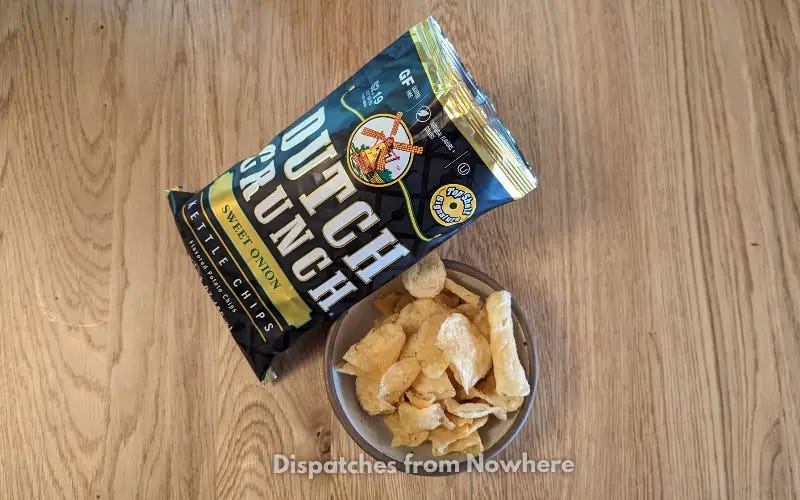
140 calories and 180mg sodium per serving (15 chips)
Potatoes, sunflower and/or canola oil, sugar. Salt, dextrose, dehydrated onion, dehydrated garlic, natural flavors, citric acid, disodium inosinate, disodium guanylate.
A good chip. but very sweet. I mean, it’s in the name, so that was to be expected. But I found the addition of dextrose made these too sweet for my liking.
3 stars. (Add a star if you like a heavy sweetness to your chips.)
Ripples Onion Blossom
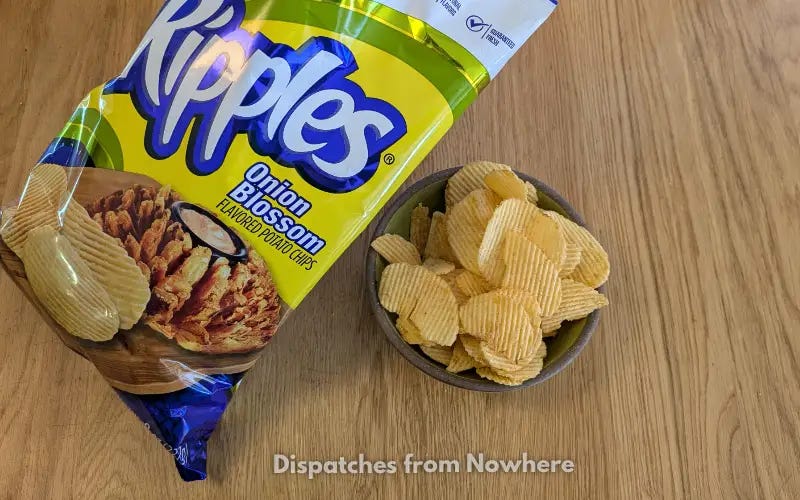
150 calories and 200mg sodium per serving. (13 chips)
Potatoes, canola and/or sunflower oil, corn maltodextrin, sugar, onion powder, salt, brown sugar, garlic powder, yeast extract, molasses, hydrolyzed corn protein, extractives of paprika (color) natural flavor.
An obvious attempt to replicate the flavor of the Blooming Onion from Outback Steak House slathered in its trademark sauce. With three kinds of sugar (and at a whopping 2g of sugar per serving), these chips are overly sweet and not at all palatable.
1 star.
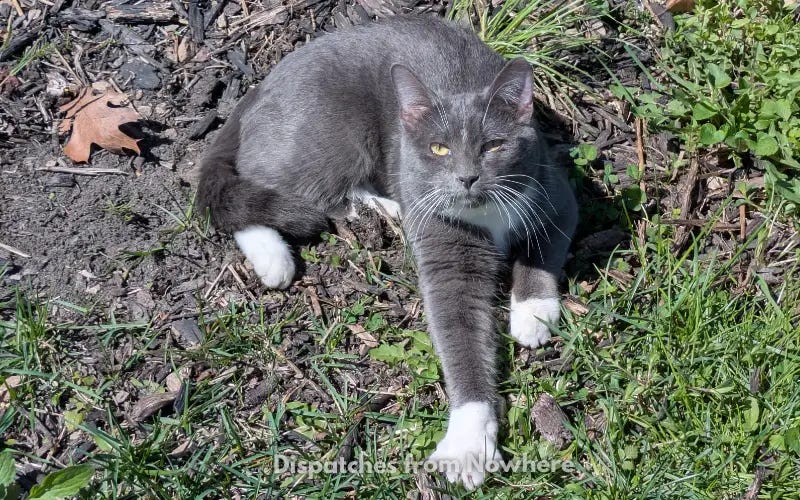
This missive is close to being lengthy, so this seems like a good place to take my leave. But, before that happens, meet Pebble, our new cat who has recently joined the family. Sweet James seems to be taking it well so far.
Thanks, as ever, for your attention. I have the next Dispatch already brewing, but until then treat yourself right and tell someone you care for that you love them.